
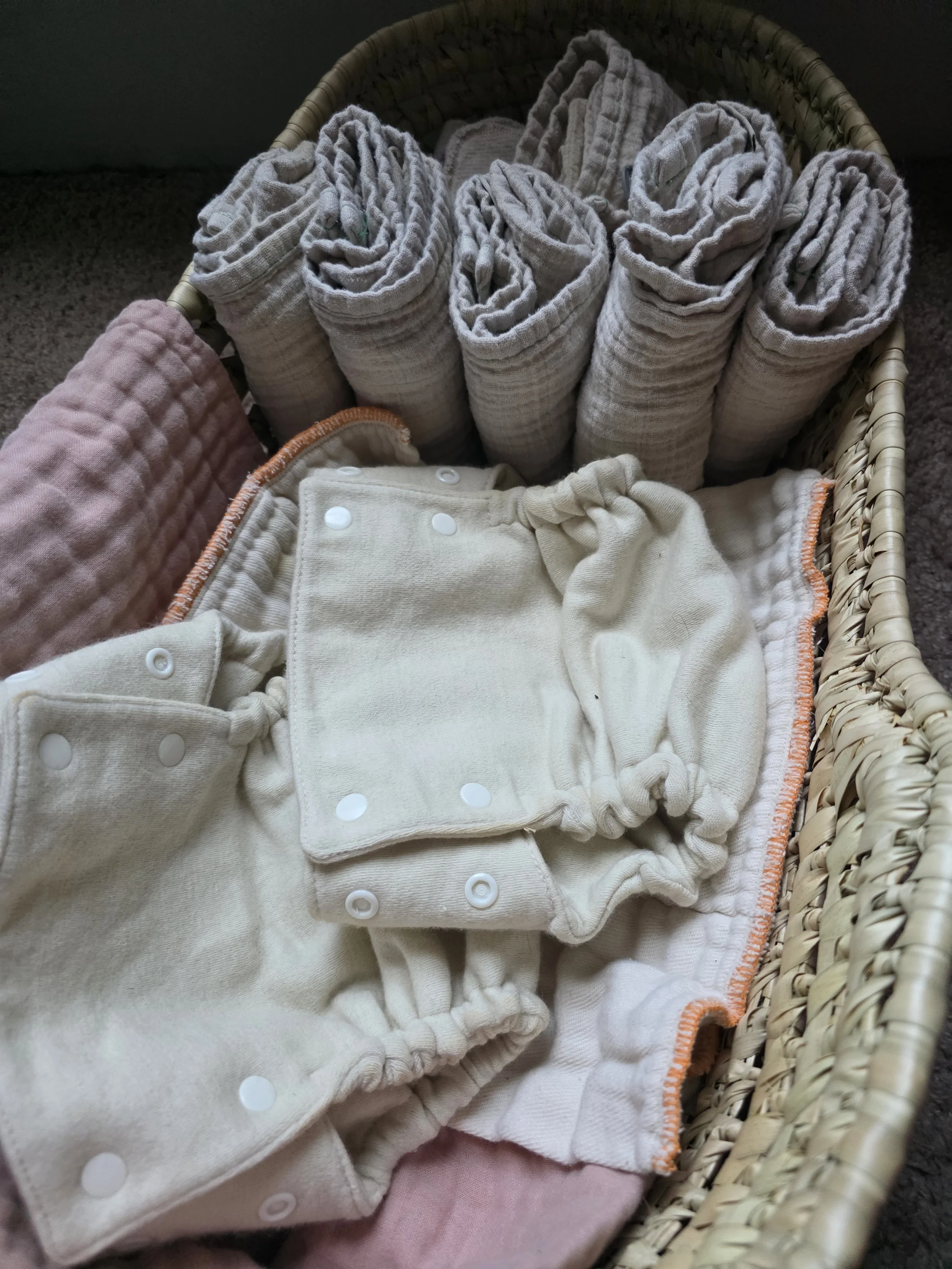
Cloth Diapering the Traditional Way
An Introduction to Simple, Natural, and Sustainable Diapering
A practical guide to cloth diapering your baby with confidence, simplicity, and an appreciation for traditional homemaking.
Learn how to use cotton flats, care for wool diaper covers, establish a simple washing routine, and incorporate cloth diapering into your everyday life—without expensive diapering systems, unnecessary products, or complicated routines.
Digital eBook | Beginner-friendly | Instant access
Cloth diapering doesn't have to be complicated.
When you begin researching cloth diapering, it's easy to feel overwhelmed.
There are countless diapering systems, materials, folding methods, washing routines, and accessories to choose from.
What should be a relatively simple practice can quickly begin to feel like an enormous undertaking.
But what if cloth diapering could be much simpler than you've been led to believe?
What if you didn't need an expensive collection of specialized diapers or a perfectly organized routine?
What if you could simply learn to diaper your baby using a few practical, reusable materials that can be washed, maintained, and used for years?
That's exactly what I want to teach you.
A return to traditional baby care
Before disposable diapers became commonplace, families cared for their babies using washable cloth.
Cotton fabric was folded, secured around the baby, washed, dried, and used again.
It was an ordinary part of caring for children.
Today, cloth diapering is often presented as an alternative parenting lifestyle, requiring special equipment and extensive research.
But I believe it can be approached much more simply.
When I was preparing for the birth of my daughter, I knew I wanted to use natural materials wherever possible.
I chose cotton flats, wool diaper covers, and reusable cloth wipes.
Since her birth, I've found cloth diapering to be one of the most enjoyable and surprisingly simple aspects of caring for her.
I fold a piece of cotton, put it on my baby, secure it, and place a wool cover over it.
When the diaper becomes wet or soiled, I wash it, dry it, fold it, and use it again.
It really can be that simple.
And through this process, I've come to appreciate cloth diapering as something more than a practical alternative to disposable diapers.
To me, cloth diapering is simply another extension of homemaking.
Imagine caring for your baby's diapers just as you care for her clothing.
There is something particularly lovely about having a collection of little cotton diapers and wool covers that belong to your baby.
They're not temporary products to be used once and thrown away.
They're useful belongings that can be washed, cared for, maintained, and eventually passed down to another child.
Just like your baby's cotton gowns, wool garments, and blankets, her diapers become part of the ordinary household laundry.
And rather than constantly purchasing new disposable products, you can learn to make good use of the materials you already own.
I find a great deal of satisfaction in this.
Not because every household responsibility needs to be made more difficult, but because there is something meaningful about learning practical skills and caring for our families through the ordinary work of homemaking.
And I want to help other mothers discover that same simplicity.
Introducing Cloth Diapering the Traditional Way
An Introduction to Simple, Natural, and Sustainable Diapering
I created this eBook for mothers who want to learn how to cloth diaper their babies without feeling overwhelmed by the enormous amount of information available.
Whether you're expecting your first baby, preparing to welcome another child, or simply interested in making the transition from disposable diapers, this guide will walk you through the essentials.
You'll learn how different cloth diapers work, what supplies you actually need, how to care for natural materials, and how to establish a practical routine that fits into your everyday life.
Throughout the guide, I also share my personal experience of cloth diapering my daughter from birth using cotton flats and wool covers.
My goal is not to convince you that cloth diapering needs to become an elaborate project.
Quite the opposite.
I want to show you how simple, practical, and enjoyable it can be.
What You'll Learn Inside
Chapter 01 — Why Cloth Diaper?
Discover the practical benefits of reusable diapers, including their versatility, durability, potential cost savings, and place within traditional baby care.
We'll also discuss common misconceptions about cloth diapering and why it may be more approachable than you think.
Chapter 02 — Understanding Cloth Diapers
Learn the differences between flats, prefolds, fitted diapers, pockets, and all-in-ones.
We'll explore natural and synthetic materials, absorbency, and diaper covers, with particular attention to the cotton flats and wool covers I personally prefer.
Chapter 03 — Building Your Cloth Diaper Stash
Find out what supplies you actually need to begin.
I'll walk you through practical diaper quantities, newborn and one-size options, cloth wipes, diaper covers, accessories, and how to build a useful collection without unnecessary spending.
Chapter 04 — How to Cloth Diaper Your Baby
Learn the basics of preparing, folding, securing, and fitting cloth diapers.
We'll discuss different flat diaper folds, using diaper fasteners, changing frequency, and handling wet and soiled diapers.
Chapter 05 — The Beauty of Wool Diaper Covers
One of my favorite chapters!
Discover why I love wool diaper covers, how wool works, what lanolin is, and how to wash, lanolize, air out, and maintain your wool covers.
I'll explain why wool care doesn't need to be nearly as intimidating as it initially sounds.
Chapter 06 — Washing and Caring for Cloth Diapers
Learn how to establish a simple and effective diaper laundry routine.
We'll cover storing used diapers, prewashing, main washing, choosing detergent, drying cotton diapers, and troubleshooting common laundry problems.
Chapter 07 — Cloth Diapering in Everyday Life
Learn how to incorporate cloth diapering into ordinary motherhood.
We'll discuss overnight diapering, outings, travel, leaks, blowouts, skin care, and adjusting your routine as your baby grows.
Chapter 08 — Keeping Cloth Diapering Simple
A reflection on traditional homemaking, making good use of what you have, avoiding unnecessary purchases, and learning through experience.
Because cloth diapering doesn't need to be another responsibility that demands perfection.
Chapter 09 — Your Practical Cloth Diapering Reference Guide
A convenient collection of checklists, everyday diapering instructions, washing reminders, wool care guidance, packing essentials, and troubleshooting tips that you can return to whenever you need them.
This eBook is for you if…
You're expecting a baby and want to begin cloth diapering from birth.
You're interested in traditional motherhood and practical homemaking.
You appreciate natural materials like cotton and wool.
You want to learn how to use simple, reusable diapers rather than relying on expensive diapering systems.
You're overwhelmed by the amount of cloth diapering information online.
You want straightforward instructions for washing diapers and caring for wool.
You hope to purchase durable baby supplies that can be reused with future children.
You want cloth diapering to become a natural part of everyday motherhood rather than another complicated undertaking.
You don't need any previous cloth diapering experience to begin.
This guide was written with beginners in mind.
You don't need to do everything perfectly.
One of the things I want mothers to understand is that cloth diapering can be surprisingly forgiving.
Your cotton flats don't need to be folded perfectly every time.
Sometimes your baby's diaper may become saturated and a little moisture may reach her clothing.
Sometimes you'll have a basket of clean diapers waiting to be folded.
And sometimes you'll need to make adjustments to your routine as your baby grows.
That's all part of learning.
Of course, proper hygiene, effective washing, and caring for your baby's skin are important.
But the ordinary imperfections of caring for a baby don't need to become a source of frustration.
Cloth diapering should serve your family, not become another burden placed upon you.
A Little About Me
As-salāmu ʿalaykum, I'm the mother behind Sunnah Birth Guide.
For the past several years, I've worked with Muslim women as a traditional birth companion and natural birth educator, sharing my love for physiological childbirth, traditional motherhood, and caring for our families with simplicity and intention.
When I became pregnant with my daughter, I already had a clear idea of how I hoped to care for her.
I wanted to invest in useful, durable belongings made from natural materials, with the intention of maintaining them and using them for future children, if Allah blesses us with more.
Cotton flats and wool diaper covers were part of that preparation.
Since my daughter's birth, I've been cloth diapering her and have come to appreciate the practice even more than I expected.
I love the simplicity of it.
I love that her diapers are actual pieces of fabric that belong to her.
And I love that caring for them has become such an ordinary part of our home.
After sharing little glimpses of our cloth diapering routine, I realized how many sisters were interested in learning how to do the same.
So I decided to put together this guide.
My hope is that it makes traditional cloth diapering feel approachable, practical, and enjoyable for other mothers, in shaa Allah.
Frequently Asked Questions
Do I need to have any experience with cloth diapering?
Not at all. This eBook is written for beginners and walks you through the basics of choosing, using, washing, and maintaining cloth diapers.
Do I have to use cotton flats and wool covers?
No. Although those are the materials I personally prefer and discuss most extensively, the guide also introduces other types of cloth diapers so you can make an informed decision about what works best for your family.
Can I cloth diaper my newborn?
Yes! I began cloth diapering my daughter from birth. The guide discusses newborn diapering, supplies, fit, frequent changes, and establishing a manageable routine during the early weeks.
Is cloth diapering expensive?
It doesn't have to be. The initial cost depends on the materials and brands you choose, but reusable diapers can offer savings over time, particularly when they're used for multiple children. The guide discusses building a practical collection without unnecessary purchases.
Do I need special laundry products?
Not necessarily. Many ordinary laundry detergents can effectively clean cloth diapers. The guide explains the principles of a thorough washing routine and what to consider when choosing a detergent.
Is wool difficult to care for?
Wool requires different care from cotton, but the process can be quite straightforward once you're familiar with it. I'll walk you through washing, lanolizing, drying, and maintaining wool covers.
Can I cloth diaper while traveling or leaving the house?
Absolutely. The guide covers packing clean diapers, using wet bags, changing your baby outside the home, and planning for longer outings and travel.
Is this a physical book?
No. This is a digital eBook that you can read on your phone, tablet, or computer.
Learn to Cloth Diaper Your Baby the Traditional Way
You don't need an enormous collection of baby products.
You don't need a complicated diapering system.
And you don't need to become an expert before you begin.
With a little knowledge, a few practical materials, and a willingness to learn, cloth diapering can become another ordinary part of caring for your baby.
I hope this guide encourages you to rediscover the beauty of simple, traditional baby care and the satisfaction that comes from learning useful household skills.
Cloth Diapering the Traditional Way
An Introduction to Simple, Natural, and Sustainable Diapering
Digital download | Beginner-friendly | Learn at your own pace
May Allah place barakah in our homes, our children, and the efforts we make in caring for them. Āmīn.
A return to traditional baby care.
Rediscover the simplicity of traditional baby care with my beginner-friendly eBook on cloth diapering. Learn how to use cotton flats, care for wool diaper covers, establish a simple washing routine, and incorporate reusable diapers into everyday motherhood. Rooted in my own experience of cloth diapering my daughter from birth, this guide offers practical instruction and an appreciation for natural materials, traditional homemaking, and caring for our babies with simplicity and intention.
My signature approach to cloth diapering is holistic, baby-centered, and rooted in traditional motherhood. I favor simple, natural materials like pure cotton and wool, frequent and attentive diaper changes, and gentle care that honors a baby's delicate skin, comfort, and individual needs. Rather than relying on complicated systems or unnecessary products, I embrace cloth diapering as an intuitive, nurturing part of everyday motherhood—one that encourages closeness, responsiveness, and a return to simple, traditional ways of caring for our babies.
Inside this 9-chapter guide, you'll learn about the different types of cloth diapers, choosing natural materials, building your diaper stash, folding cotton flats, caring for wool covers, washing and maintaining diapers, and cloth diapering in everyday life. Complete with practical checklists, troubleshooting tips, and guidance for keeping cloth diapering simple.
بِسْمِ اللهِ الرَّحْمٰنِ الرَّحِيْمِ
As-saalāmu ʿalaykum,
My name is Fatimah. I am a birthkeeper, childbirth educator, homemaker, wife, and mother.
About Me | Work With Me
I guide Muslimaat to give birth at home and have peaceful, unmedicalized pregnancies outside of the system with knowledge, gratitude, patience, and tawakkul on Allah, rooted in tawheed and the way of the Sunnah and Salaf as-Saliheen.
My approach as a birthkeeper/traditional birth attendant/birth educator is rooted in returning to the way of our fitrah. The Fitrah is our innate disposition upon which Allah created us: Tawheed. I believe the true essence of birth preparation is preparing and cultivating one’s heart and mind through truly knowing Allah. And this is because the body was already designed perfectly by Allah to give birth. At our core, we are spiritual beings who need to cultivate a relationship with Allah, our Creator, and it is through this connection that we find true contentment and bliss. Birth is an involuntary act we have no conscious control over, and it is through complete submission and closeness with Allah that we can cultivate true patience and gratitude.
My approach to pregnancy and birth are rooted in preserving the natural physiology and design of birth by rejecting interference and disturbances to the natural process, and letting it unfold on its own as an act of devotional worship to Allah alone. It involves seeking beneficial knowledge both deeni and dunyawi, wholesome traditional animal-based and holistic nutrition, nurturing trust, and cultivating patience, gratitude, and true tawakkul. Tawakkul is one of the greatest acts of worship.
My specialty is non-medicalized, unassisted and undisturbed pregnancy + birth at home. Also known as “freebirth”. I love to work with like-minded, aligned Muslimahs. My work is centered on women pursuing natural, non-medicalized pregnancy, unassisted birth at home, and a non-allopathic approach to health and wellness. I don't simply accompany women wherever they happen to give birth - I do not attend hospital births or births with medical practitioners present. I mentor women who have intentionally chosen a path outside the conventional allopathic system and want knowledgeable, faith-centered companionship as they prepare for that journey.
I believe at the heart of birth is trust, and birth can be a means to bring us closer to Allah 'azzawajal through strengthening our knowledge and love of Him, seeking His aid, relying upon Him fully, and seeking our reward with Him through the correct intention and cultivating patience, trust, and gratitude.
My passion for pregnancy and birth intersects with my passion for natural health and wellness. My approach is rooted in authentic Prophetic/Islamic medicine, non-allopathy, and the belief that our bodies were designed by Allah to heal on their own. I am passionate about simple, primitive, and Prophetic medicines, principles, and concepts that support the body’s natural ability to heal. I take a completely non-allopathic approach to my own health and wellbeing. I am also very passionate and interested in living a low-tech, self-sufficient, minimalist lifestyle. This is foundational as well in my approach to pregnancy, birth, health, and every other aspect of my life.
The home is a virtuous place for the Muslim woman and it truly is her sanctuary. A Muslim woman worships Allah the best in her home, and it is my belief and opinion that birth is not a necessity which requires a woman to leave her home; in fact, it is the opposite; I believe that leaving the home is the first intervention in childbirth that introduces unnecessary risk, while remaining at home supports and protects birth by giving it the beneficial environment to progress and unfold naturally as Allah designed it.
Tawakkul is not passive and neither is choosing to birth at home; tawakkul is an active state of the heart which combines taking the useful, beneficial means and trusting and relying solely upon Allah alone to provide for us.
I am located in central Indiana and open to attending births within my locality - this includes within the state of Indiana, Kentucky, eastern Illinois, eastern Ohio area, and some parts of Michigan.
My pregnancy and birth companion services are also offered remotely for Muslim couples worldwide who are planning a birth at home.

Assalamu’alaikum dear sister,
Are you passionate about having a homebirth but don’t know where to start?
Maybe you are breastfeeding your baby but need support?
Looking for general support and assistance during your pregnancy?
This is an open session for any and all questions you may have.
Our session will be 1 hour and will take place through WhatsApp, Telegram, or Zoom.
After you purchase your session, please keep an eye on your email inbox for a message from me.
Consultation with Fatimah
2 hour consultation session for sisters who may have questions planning their homebirth/freebirth, or looking to debrief a previous birth experience.
After purchase you will receive an email directly from Fatimah to schedule.
Assalamu’alaikum dear sister,
Are you passionate about having a homebirth but don’t know where to start?
Maybe you are breastfeeding your baby but need support?
Looking for general support and assistance during your pregnancy?
This is an open session for any and all questions you may have.
Our session will be 1 hour and will take place through WhatsApp, Telegram, or Zoom.
After you purchase your session, please keep an eye on your email inbox for a message from me.
Fitrah Way of Birth
1:1 Pregnancy, Birth & Postpartum Support
The Fitrah Way of Birth Mentorship is my signature 1:1 pregnancy and birth support package for the Muslimah giving birth at home and navigating pregnancy outside of the medical system. This 1:1 mentorship was created for the Muslimah who seeks to return to the natural, undisturbed, and deeply spiritual design of childbirth: the way of tawakkul.
The Muslimah who recognizes pregnancy, birth, and mothering as a path of joy, love, radiance, and closeness with Allah.
The Muslimah who seeks to step away from the fear-based, over-medicalized approach to birth and return to the traditional, natural way at home.
For the Muslimah who wants guidance to experience pregnancy, birth and motherhood as acts of devotion and worship to Allah through giving birth at home, in it’s most raw and natural form, and truly embracing the natural design of Allah.