The Truth about the Modern Birth System
In modern obstetrics, only the “risks” of pregnancy and birth are magnified and highlighted, and we see this in the increased rates of prenatal screening and fetal monitoring throughout pregnancy and even during birth as an attempt to “reduce” the risks. Pregnancy and birth overall are viewed as risky and dangerous.

“Expecting trouble” has become the hallmark of prenatal care, leading to an exaggerated concern in women, which has resulted in incredibly high medical interventions throughout pregnancy and childbirth, which explains the concerning increased rates of cesarean sections as well as maternal mortality.
To understand birth — and the value of undisturbed birth in particular — we must first understand that a mother and her baby are a dyad, a connected unit. Allah has created them in a perfect symbiosis — physically, hormonally, and emotionally. What benefits one benefits the other, and what harms one will harm the other.
This connection is essential not only during pregnancy and labor, but also for breastfeeding and postpartum healing. When left undisturbed, the mother and baby work together seamlessly through a series of hormonal exchanges that make birth smooth, breastfeeding effortless, and bonding natural. This is part of Allah’s design for mammalian life and human survival.
Many hospital practices, while presented as beneficial, actually disrupt birth and create the very complications they claim to prevent. These procedures are not, in my opinion, required or beneficial for a healthy birth.
It’s important to recognize that hospital systems and industrialized birth practices exist to sustain themselves. They rely on a cycle of manufactured dependency; creating problems through intervention, then using further intervention to solve the problems they created. Governments and medical industries have invested billions into these systems, and so they continue, even when the evidence contradicts them.
And yet, it’s true that some women do have positive hospital births. Some come away feeling grateful and empowered. And that is something to respect and be happy for. But it’s also important to understand that a positive hospital birth often depends on factors completely outside the woman’s control; the staff on duty, the policies in place that day, and how “compliant” the mother appears to hospital staff.
Whether they are treated with compassion or disrespect, whether their wishes are honored or ignored, often comes down to whoever is working that day — not actual autonomy. Doctors and hospital staff ultimately have the power to override consent, and they often do, believing that their authority justifies intrusion “for safety.” But true consent cannot exist in a system where coercion, fear, and misinformation are normalized.
Birth in an industrial system is something that is done to women rather than experienced by them.
Even when the language is softened — “delivered,” “assisted,” “managed” — the underlying reality remains one of control. Most women give birth in hospitals not because it is safer, but because they have been taught to believe that it is necessary.
And yet, for some women, the hospital is the right place — whether due to true medical need or personal choice. Islam allows for taking the means when required, and we respect those who choose differently. But we must also be honest: for most women, birth at home — particularly when free from unnecessary interference — is far safer, calmer, and more in harmony with the way Allah created our bodies to function.
Women should have full, truthful information to make truly informed choices. They should be treated with compassion, respect, and dignity wherever they give birth. Sadly, this is rarely the reality within hospital systems today.
I often meet sisters who describe their hospital births as “wonderful,” yet when they recall what happened, the details reveal trauma that has been normalized — immediate cord clamping, separation from the baby, painful procedures, or aggressive handling justified as “necessary.” Many women cannot fully process these experiences because doing so would mean confronting how deeply they were disempowered. It is easier to believe it was “for the best” than to face that something sacred was taken from them.
Once you begin to see it clearly, it cannot be unseen. The truth about birth changes how you view the entire system — and perhaps, the world itself. But this truth is freeing. It returns women to what is real: the wisdom of their own bodies, the mercy of their Creator, and the safety that comes from trusting Allah’s design over the manufactured fear of modern systems.
And though the realization may come with pain, the reward is worth it. Knowing the truth allows you to birth — and to live — with tawakkul, peace, and clarity.
In the modern Western medical system- which is prevalent and present in every country all over the world, not just America or the West- pregnancy is often viewed through what can be called the Technocratic Model: one where decisions are made and controlled by technical experts using scientific knowledge and technology to achieve “efficiency and effectiveness”, often prioritizing objective, data-driven methods over humanistic values or patient preferences.
This approach emphasizes standardized procedures, technological solutions, and expert authority, as seen in the pervasive use of medical technology, institutional hierarchies, and a focus on measurable outcomes like mortality rates.
Implicit in this model is the idea that the baby develops inside the mother almost like a machine being assembled, that the doctor is the overseer of this process, and that it is the doctor who will ultimately “deliver” the baby.
This perspective ignores the reality that it is Allah who creates, fashions, and brings forth life, not a physician, not a machine, and not a protocol.
For most women all over the world today, this medical paradigm becomes the overarching structure in which they experience pregnancy, even if they never consciously agreed to its beliefs.
A woman will first seek official confirmation of her pregnancy from an obstetrician, as though the signs Allah has placed within her are not enough without a stamp of approval.
Her pregnancy will then be measured in scheduled appointments, monitored by machines, and narrated to her by someone in a white coat.
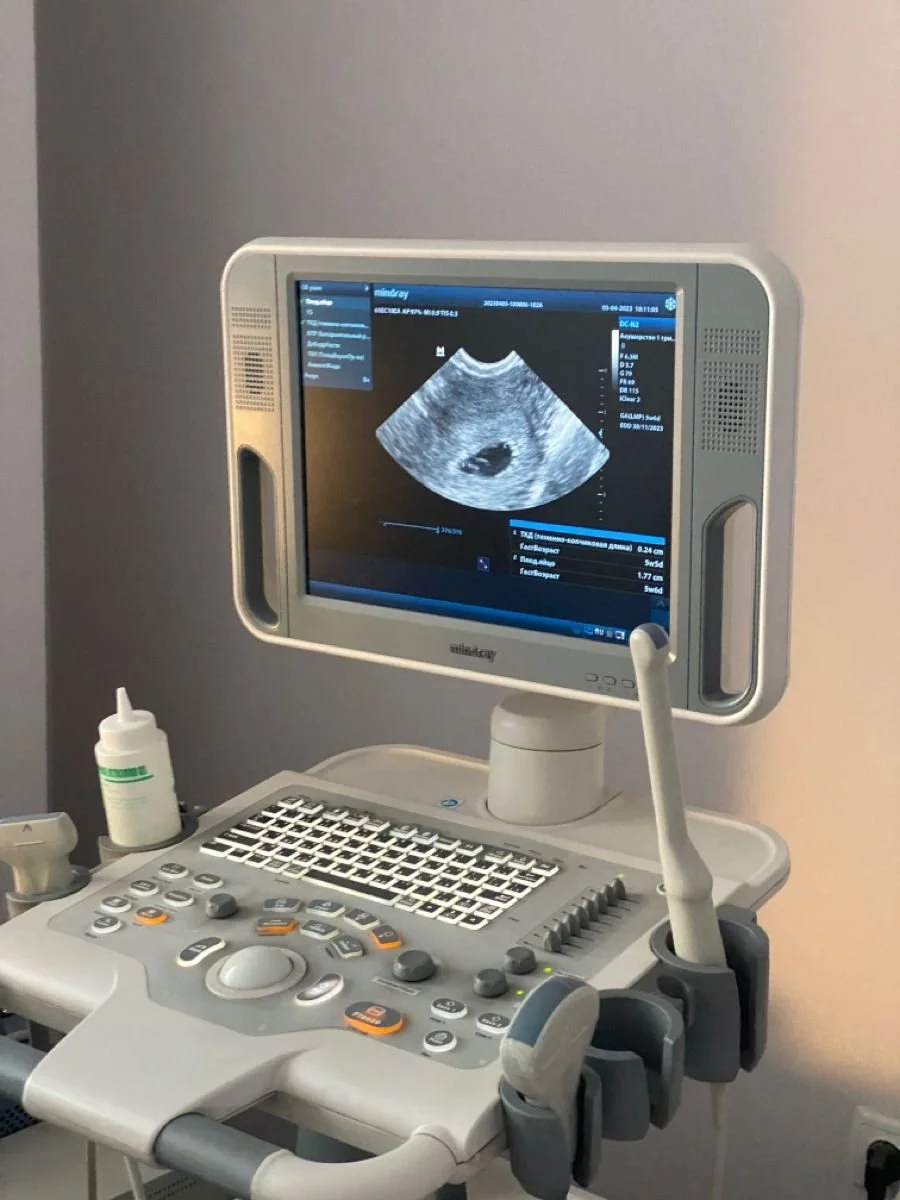
She will wait for the doctor to tell her when she is “halfway” through, to show her the baby’s first “picture” from an ultrasound, a device that, in reality, exposes her child to waves of energy that previous generations never knew of or needed.
She will be told the baby’s sex before she even holds him or her in her arms, and she will be assigned a due date calculated by a standard formula, even if she knows for certain when her baby was conceived.
As the due date approaches, her visits will intensify. If she goes beyond this arbitrary date- sometimes even just a few days- pressure mounts. Even weeks before she reaches 40 weeks, she is warned that if she goes beyond 40 weeks, they will need to induce or consider C-section.
The system (her doctor) will call her “overdue,” and if she passes one or two weeks beyond the date on the chart, her labor will be artificially induced, regardless of whether she or her baby show any signs of distress.
Labor will not begin in the peace of her home, surrounded by her dhikr and her trust in Allah, but under bright hospital lights, among strangers, with protocols to follow.
After the birth, she will take her baby to a pediatrician to ensure the child is “healthy” and follow more protocols and commands from her baby’s pediatrician.
Six weeks later, she will return to the obstetrician for a check-up, completing a cycle that has kept her dependent on the system from the moment she sought confirmation of her pregnancy.
This model is not just about medical procedures, it is a mindset.
It conditions women to believe that pregnancy and birth are managed by the doctors and the tests, when in reality they are natural, organic processes unfolding according to Allah’s Will and Perfect Design.
It replaces tawakkul with dependency on the system, and it normalizes interference in one of the most sacred and natural processes a woman will ever experience.
For many first time mothers in Western society, or where the technocratic birth system exists, one of the first feelings they experience is panic, a sudden awareness of how little they know about pregnancy, birth, and caring for a newborn.
Realizing this, women begin searching for answers and knowledge throughout pregnancy.
However, the kind of “knowledge” they are taught to seek and are mostly exposed to online, is limited to the scientific, medical model of birth only- the language, procedures, and worldview of the obstetric system.
They are taught to place trust only in what can be measured, tested, and confirmed by medical professionals. Even if a woman “just knows” she is pregnant, or intuitively senses her baby’s sex, her own knowledge is seen as uncertain until a test or ultrasound “proves” her right.
This divide between what they call “objective” scientific knowledge and the intuitive, embodied knowledge that Allah has placed within a woman is at the heart of how the modern system works.
The internal knowledge Allah has gifted women, a natural connection to their bodies and their babies, is dismissed, while the system elevates only what can be processed through its rituals and machinery.
From the very first prenatal visits, these regular appointments teach dependency on the doctor and their permission or confirmation.
Women are told when they will hear their baby’s heartbeat, when they are “halfway” through pregnancy, and when their due date is.
This is the reality of the technocratic birth model: it removes a woman from the position of active, conscious autonomy, intuition, and reliance on Allah, and instead places her in unquestioning dependence on another human being for all decisions, regardless of how she may feel about it or what her true preferences are.
Planning your freebirth? Work with me here.
Take my Islamic homebirth and freebirth self-paced course here.
Book a 1:1 consult with me here.